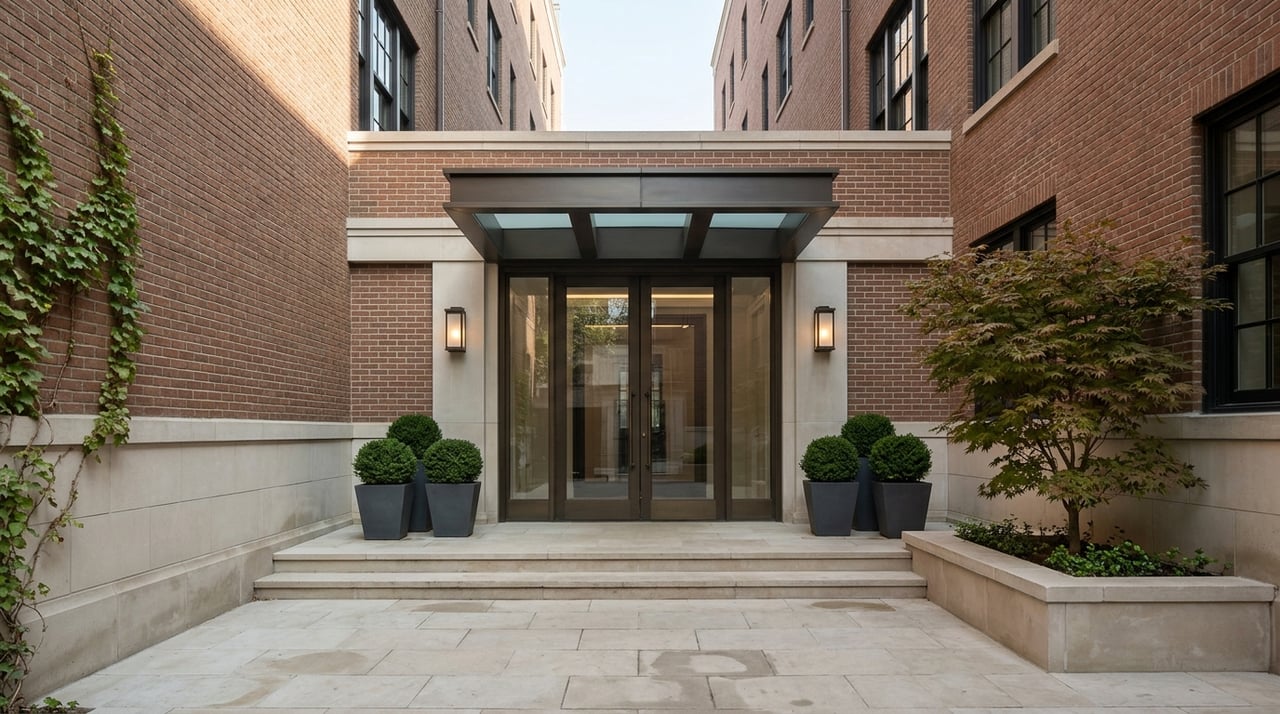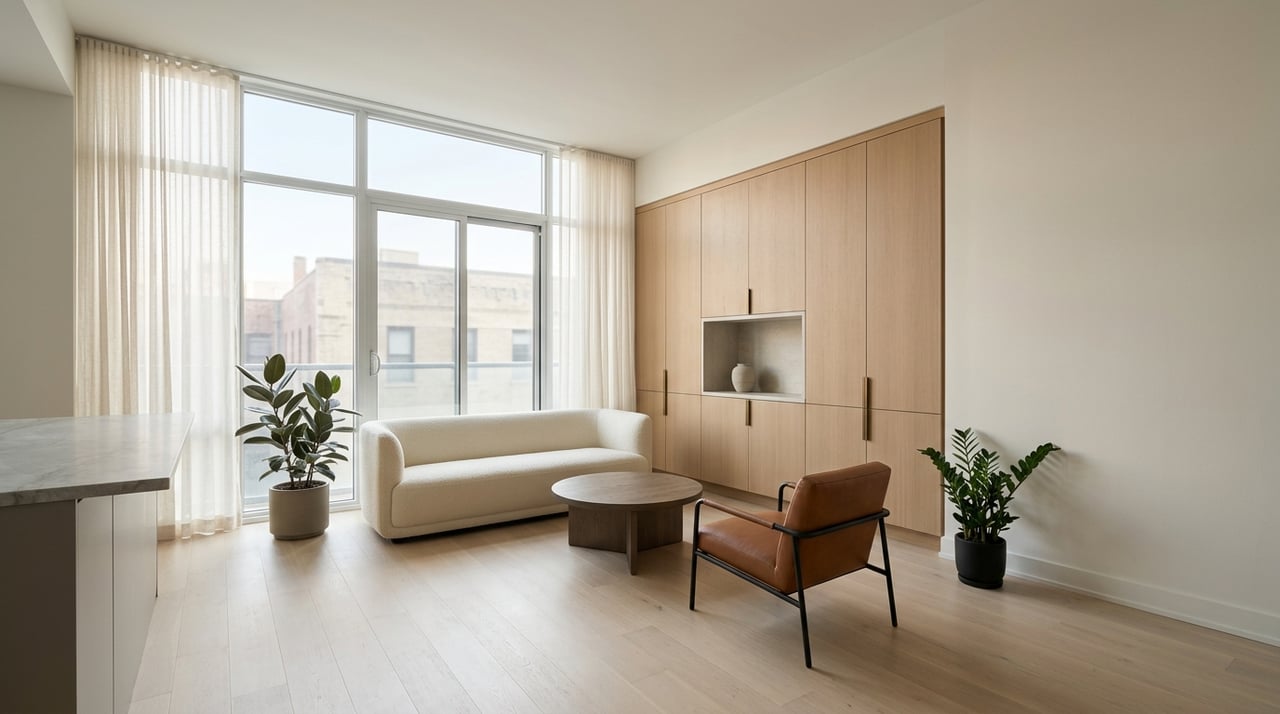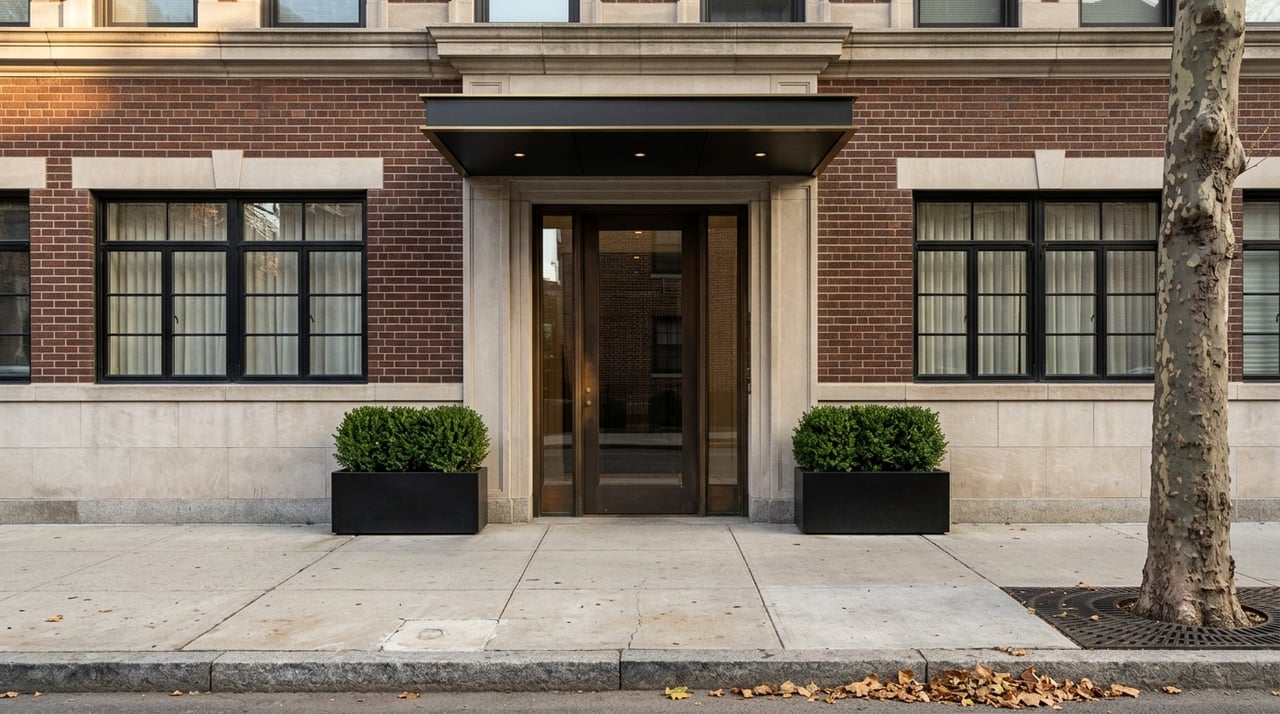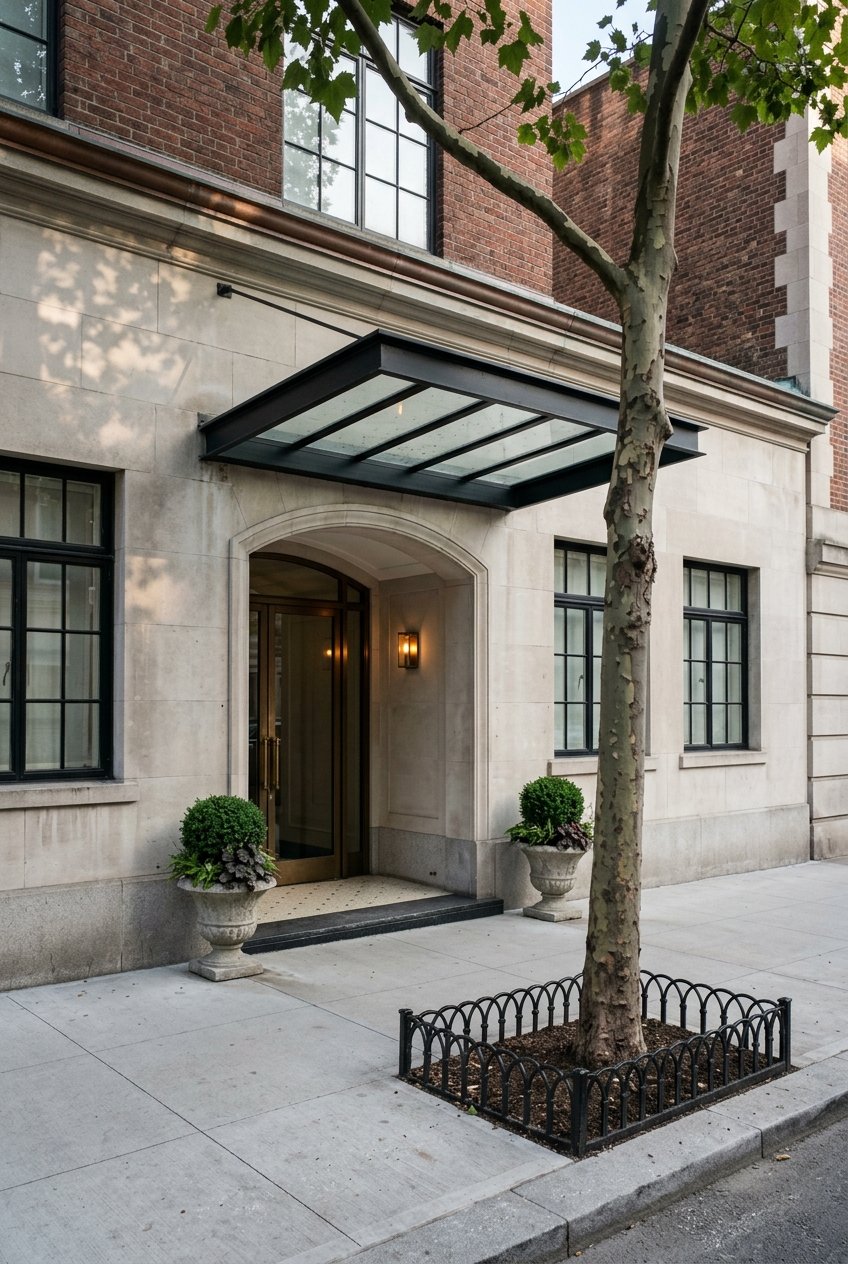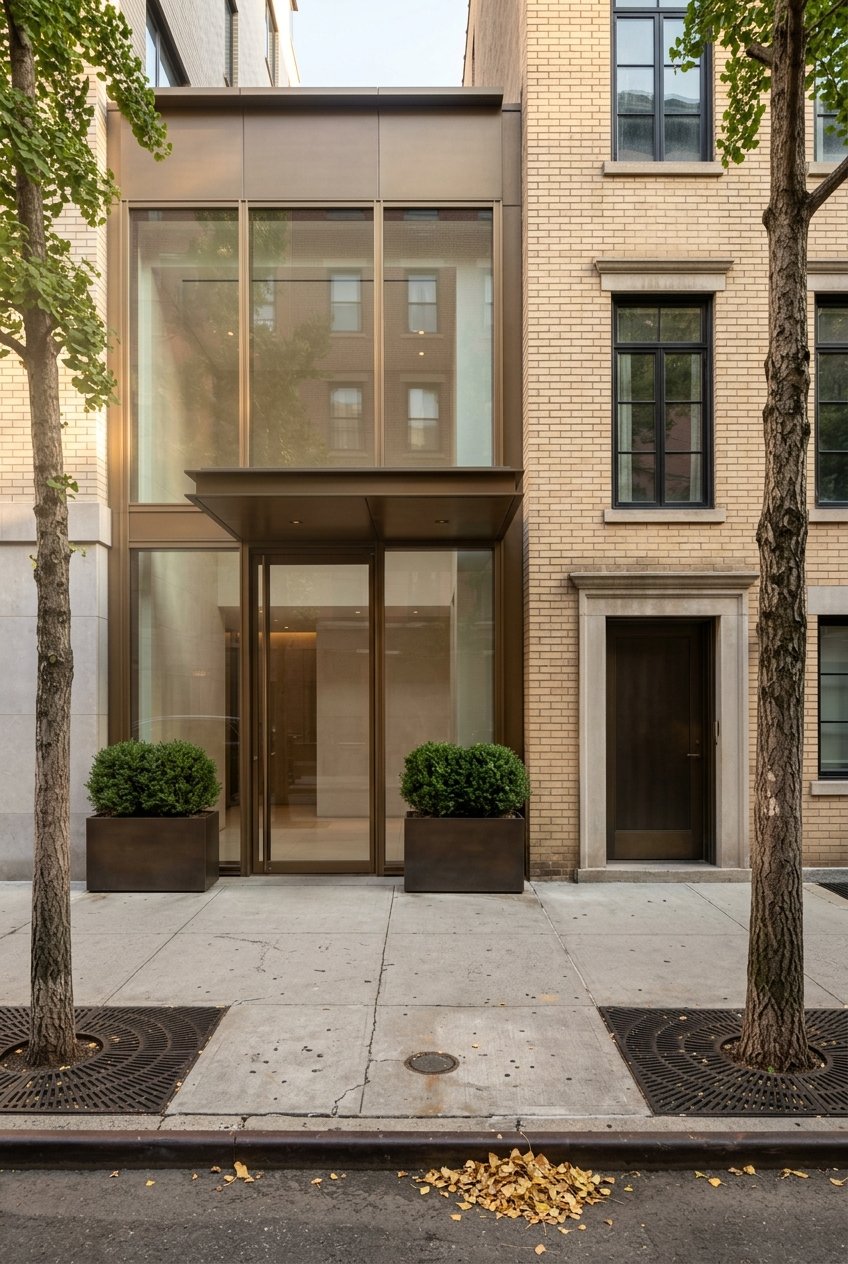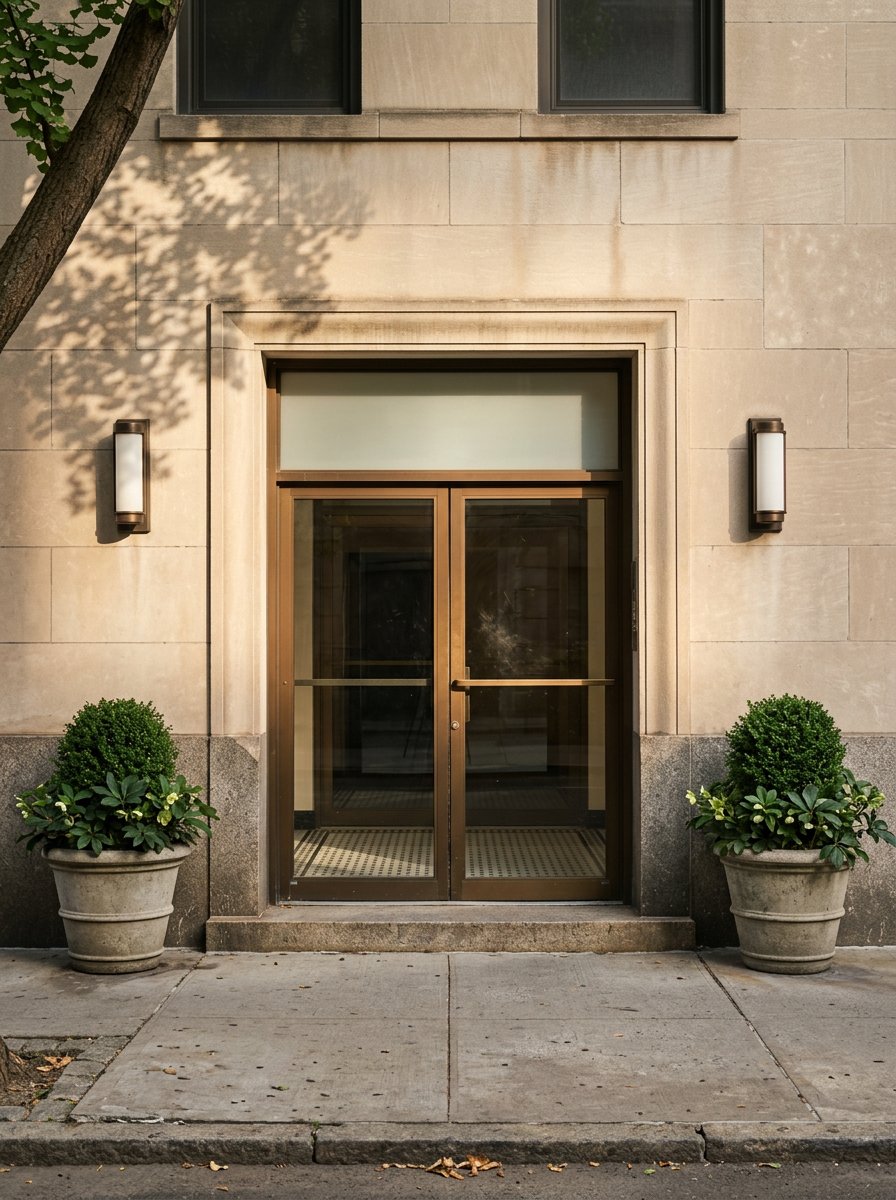

For a decade, the Upper West Side move-up buyer had a clean choice: stretch into a new condominium with central air and a doorman, or trade sideways into a larger prewar co-op and take on a board. That choice has narrowed. The new-development shelf is nearly empty, and the price gap between the two product types is now doing work it was never designed to do. Reading the neighborhood through the median alone will mislead you about where the value has moved.
The number that anchors this is small enough to feel like a typo. According to Corcoran Sunshine Marketing Group data reported by Bloomberg in October 2025, the Upper West Side is due to get just 51 new condo units in the three years through 2028, down from the 869 new condos added from 2016 to 2019, a 94% slide that was the steepest for all the Manhattan neighborhoods Corcoran Sunshine tracks. Fifty-one units, spread across a residential corridor that runs roughly fifty blocks.
The Pipeline Math, And What Is Actually Choking It
The macro story is familiar: elevated construction costs, expensive land, and lenders who have rotated toward rental and office-to-residential conversions. The Upper West Side layers on constraints the rest of Manhattan does not carry in the same combination.
The first is legal. A 2019 state law made rental-to-condo conversions much harder, requiring developers to sell at least 51% of units to existing tenants, an unlikely outcome in most cases. That path used to feed a steady trickle of new condo product into the neighborhood; it is now effectively closed.
The second is physical. By many measures the Upper West Side is reaching full build-out, large parcels are rare, and many of the neighborhood's streets fall under historic or landmark designations, restricting the scale and variety of potential development, with community opposition further complicating permitting and design for more aggressive projects. Extell's 69-story 50 West 66th Street drew lawsuits; its next plan, a roughly 1,200-foot tower at the former ABC headquarters, has already produced organized resistance and, as of late 2025, no filed permits.
The third is demand-side, and it is the one buyers underestimate. Lisa Lippman of Brown Harris Stevens told Bloomberg that "people have turned away from prewars for new development with instant gratification." That preference shift arrived at the same moment the pipeline stopped delivering. In the third quarter, sales at new developments jumped 41% from a year earlier, while resales were largely flat.
What The Price Gap Actually Measures
Two headline medians describe the Upper West Side in April 2026. Median condo prices remained flat year-over-year at $2.4M, while median co-op sale prices were $1.4M, a 22.4% year-over-year change. A million dollars of separation, on medians alone, is not a lifestyle preference. It is scarcity being repriced.
| Property type (UWS, April 2026) | Median sale price | Notes |
|---|---|---|
| Condo | $2.4M | Flat YoY; new pipeline capped at 51 units through 2028 |
| Co-op | $1.4M | Up 22.4% YoY; deeper transaction count |
| Neighborhood overall | $1.9M | Up 25% YoY; 146 sales, +67.8% YoY |
Those figures come from PropertyShark's April 2026 snapshot, which also put the median price per square foot at $1,677, a 10.7% YoY change. A separate weekly read from UrbanDigs, cited by Manhattan Miami for the week of May 25, 2026, tracked the condo-only line higher: condo price per square foot reached $1,752 on a two-month rolling median, up 11.2% from a year ago, while co-op pricing held at $1,194. The condo/co-op spread on a per-square-foot basis is now wider than the headline medians suggest, because condo buyers are also buying newer construction, better systems, and a smaller queue at the closing table.
The counterintuitive read is here. If your comparable is a new-development condo, the pipeline collapse has moved the market against you. If your comparable is a prewar co-op with good bones, the same collapse has done almost nothing to your competitive set, and in several corridors it has quietly expanded the pool of move-up buyers willing to consider a board.
Three Corridors, Three Different Trades
The Upper West Side is not one market, and the pipeline shortage does not press equally on each corridor. Reading a listing without knowing which sub-market you are in is how buyers overpay.
- Lincoln Square, south of 70th Street. Anchored by Lincoln Center, with substantial post-war full-service co-op and condo inventory at buildings such as Lincoln Plaza, Lincoln Towers, the Park Laurel, and Fifty West 66, plus recent contemporary condos including 15 Central Park West and The Park Loggia. This is where new-development demand concentrates, and where the shortage is most visible. Extell's 50 West 66th Street is the local reference point: the lowest sale there came in at $3.6 million, while resale condos averaged $1.6 million in the third quarter.
- Central Upper West Side, roughly 70th through 86th. The deepest concentration of prewar full-service co-op inventory off Central Park West and West End Avenue, including the San Remo, Beresford, Majestic, Kenilworth, Eldorado, and the Dakota. This is where the condo-priced-out buyer lands, and where sellers of larger classic layouts are quietly rediscovering pricing power the median does not show.
- Upper Upper West Side, 86th through 110th. The Broadway, West End, and Riverside Drive prewar inventory extending north. Delivers the most square footage per dollar and the widest maintenance range. The buyers here are usually families sizing up, not new-condo refugees, but the recent northward drift of new restaurants and services above 96th has softened the historic price step at that latitude.
Buyers who understand which corridor a building sits in can price against the right comparable. Sellers who market a Central UWS classic seven against Lincoln Square new-development comps will confuse their own audience.
The Friction That Shows Up At Contract
If the price gap is now doing more work in the market than it used to, the transactional layer under it deserves close reading. A well-priced co-op is not a discounted condo. It is a different instrument.
Flip taxes and financing math
Many Upper West Side co-ops carry a transfer fee, and the structure varies more than buyers expect. The formula can be a flat fee, a percentage of sale price, a percentage of profit, or a per-share charge, and the party responsible depends on the building's rules and the negotiated contract. Lenders generally treat the flip tax as a closing cost rather than something they finance, which means the buyer needs to see it in cash-to-close before the appraisal comes back, and the seller needs to see it in their net-proceeds worksheet before they set an ask. On a $1.4M co-op with a 2% flip tax paid by the seller, that is $28,000 out of net at closing, roughly a floor's worth of pricing.
Board packages and liquidity
Financing rules and post-closing liquidity requirements sit inside the proprietary lease and vary building by building. Co-op boards on the Upper West Side vary from extremely restrictive to moderate, with pied-à-terre use, subletting, and financing limits common restrictions. A buyer who could easily close on a $2.4M condo may be a marginal candidate at a $1.4M co-op if their liquid assets skew toward equity in illiquid vehicles. This is where the sub-$4M financed buyer, described by Manhattan Miami's May 2026 read as benefiting from rates about 0.36 points lower than a year ago, still hits a friction the mortgage market does not price: the board.
How To Read A Listing In A 51-Unit Market
Three practical adjustments follow from the thesis.
First, weight the age of the comparable more than the address. A 2018 condo sale on West 66th tells you almost nothing about a 2026 asking price on the same block, because the comparable set for new-development supply has structurally changed. Corcoran Sunshine's Ryan Schleis has described several converging pressures on the pipeline, including capital that has rotated away from condo development toward rental and conversion projects.
Second, treat the flat condo median as evidence, not stasis. Flat medians in a shrinking-supply market usually mean transaction mix is holding the number down while the underlying per-square-foot line runs harder. The 11.2% YoY condo PPSF gain against a flat median is exactly that pattern.
Third, if you are the seller of a larger prewar co-op that has been reading as "overpriced" against a two-year-old comp set, ask whether your true competition is still the neighborhood's condo tier or whether it has quietly become the co-op three blocks north. In a market where days on market compressed to 65, down 22.6% in a month, the difference between the right comp and the wrong one is measured in weeks.
FAQ
Does the pipeline shortage extend to rentals? The 51-unit figure covers new condominium units. Rental development has its own trajectory and its own capital stack, and lenders have in fact rotated toward rental and office-to-residential conversions elsewhere in Manhattan, which is one reason condo product specifically is scarce.
Will the Extell ABC campus project change the math? Not on the current timeline. As of late 2025, demolition was underway but permits had not been filed for a new building, and the reported 1,200-foot proposal was drawing organized community opposition. Nothing that has been announced would deliver units inside the three-year window that defines the current shortage.
Is a prewar co-op still the right choice if I need turnkey? Sometimes. The buyer preference for central air, in-unit laundry, and modern systems is real, and it is what has bid up the new-development tier. A recently renovated prewar with updated mechanicals and a moderate board can bridge the gap; a mid-century co-op priced against unrenovated comps may not. The question is not co-op or condo. It is which building.
If you are weighing an Upper West Side move-up in a market where the new-development alternative has effectively left the field, a confidential read on the right comparable set matters more than a headline median. Hilary James at Brown Harris Stevens advises buyers and sellers of Upper West Side condominiums and cooperatives with the discretion and building-level knowledge these transactions require. Request a confidential consultation.